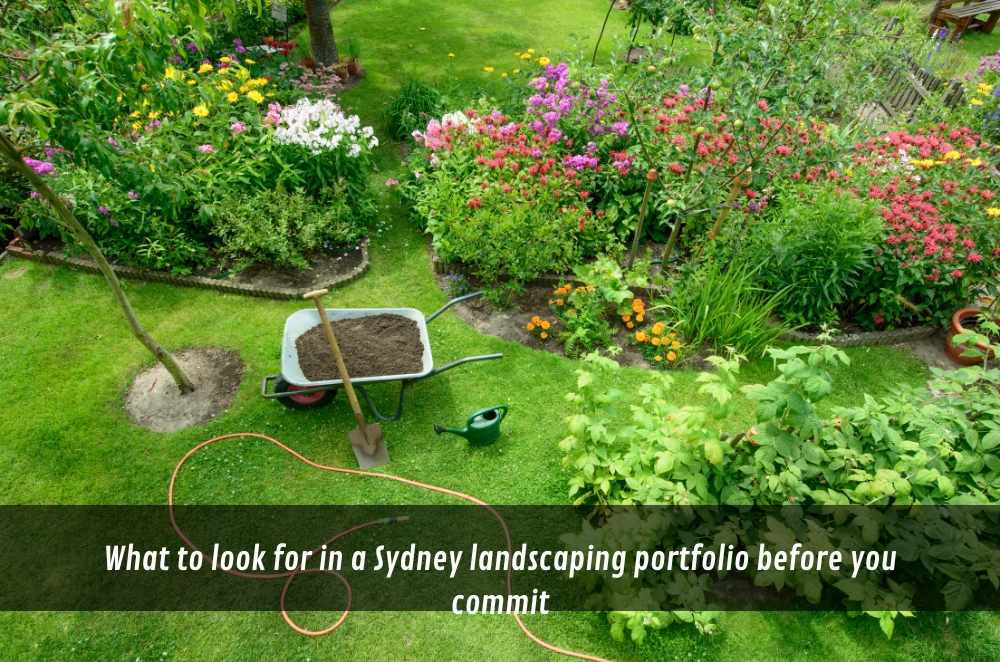
Choosing a landscaper often starts with photos—and that’s not a bad thing. A well-documented project gallery can show you the “before” constraints, the “after” finish, and the kinds of sites a team actually works on (tight access, slopes, tricky drainage, or older homes with established trees).
That’s why it helps to view their portfolio early, before you fall in love with a single idea on Pinterest. Portfolios can reveal whether a contractor routinely delivers the type of work you’re considering—paving that stays level, turf that looks even, retaining walls that sit straight, and planting that makes sense for the site.
In Sydney, that evidence matters because outdoor projects aren’t happening on a blank canvas. Between reactive clay soils, steep blocks, shade from neighbouring buildings, and summer downpours that test drainage, good landscaping is usually more about problem-solving than pure styling.
Start with “similar block, similar problems”
A portfolio is most useful when you treat it like a filter, not a mood board. Look for projects that match your reality:
Slope and levels: Does the work show terracing, steps, edging, or retaining that looks deliberate (not like it was forced to fit)?
Access constraints: Inner-suburb side access and narrow driveways change what machinery can be used, which affects cost and finish.
Sun and shade: Planting that thrives in full sun won’t necessarily cope in a courtyard that gets two hours of winter light.
Drainage signs: Photos that show falls, channels, or clear transitions between surfaces can be a clue the team planned for water movement—not just how it looks on day one.
If the portfolio is heavy on “after” shots only, that’s not automatically a red flag—but the best galleries usually show enough context to understand what was changed and why.
Look for construction details, not just styling
Sydney landscaping tends to include practical upgrades—paving, turf, planting, edging, retaining, and often a re-think of how you move through the yard. When scanning projects, zoom in on the parts that fail first if they’re rushed.
Paving and hard surfaces
Good paving work often looks boring in the best way: consistent lines, tidy edges, and transitions that don’t scream “trip hazard.” When reviewing photos, check for:
Even joints and consistent spacing
Clean borders where pavers meet garden beds or lawn
Sensible transitions at steps, door thresholds, and paths
Signs that surface water has somewhere to go (fall away from the house, not toward it)
Retaining walls and level changes
Retaining is one of the most misjudged parts of a landscape plan—especially on sloped blocks. In a portfolio, retaining walls should look aligned and intentional, not like an afterthought used to “patch” a level issue.
If your project needs retaining, treat it as a safety-and-longevity item, not a cosmetic feature. Depending on height and site conditions, you may need engineering, drainage behind the wall, and (sometimes) approvals. A responsible landscaper will flag this early rather than wave it away.
Turf, soil prep, and lawn finish
Fresh turf photographs can be misleading, because almost any turf looks good for the first week. Better portfolio evidence includes:
Level, even surfaces (no obvious bumps or dips)
Edges that meet paths and beds neatly
“Before” context showing what was removed or regraded
Signs of soil preparation (not always visible, but you can often infer it from the final levels)
If the portfolio shows multiple turfing jobs across different suburbs and seasons, that can be more reassuring than one perfect lawn shot.
Use a portfolio to confirm scope, not assume it
A common trap is to see a finished backyard and assume it was “one job,” when it may have been staged or completed in phases. As you compare project examples, try to identify what the work realistically included:
Removal and disposal (old tiles, overgrown garden, debris)
Levelling and regrading
New edging, beds, or retaining
New planting plan (or just replanting existing stock)
Surface work (paving, gravel/pebbles, decking)
Finishing details (mulch, lighting, irrigation)
The more clearly a portfolio labels the services used on each job, the easier it is for you to match your needs to a likely scope.
A practical checklist for comparing portfolios side-by-side
When you’ve got a few contenders, it helps to compare them using the same questions each time:
Do they show projects like mine? (slope, access, courtyard, family lawn, low-maintenance front yard)
Do finishes look consistent across multiple jobs? One great photo doesn’t prove a pattern.
Is there evidence of problem-solving? Drainage, levels, and transitions are usually the make-or-break items.
Is planting believable for Sydney conditions? Look for the right plant in the right place, not just “lush.”
Do hardscape details look tidy up close? Edges, joints, and alignment matter.
Portfolios don’t tell you everything, but they can prevent obvious mismatches—like hiring someone known for soft landscaping when your site needs serious level changes.
Planning your own project so the “after” lasts
A good landscaper will ask questions that sound less like design and more like daily life. You can get ahead by thinking through these before you request a quote:
How you’ll actually use the space
Do you need a clear play area, entertaining zone, pet-friendly surfaces, or room for a veggie patch?
Is shade a feature (summer comfort) or a challenge (patchy lawn, damp corners)?
Where do people walk now, and where do you wish they walked?
The best landscapes tend to make movement easy: paths that follow natural desire lines, seating where you’ll actually sit, and lawn where it gets enough light.
Water, drainage, and downpours
Sydney storms can turn small grading mistakes into ongoing headaches. Ask about:
How surface water will move away from the house
Whether new hard surfaces will change runoff patterns
What happens at the bottom of a slope
Whether garden beds will capture or shed water
Even if you’re not doing major works, small changes in levels can affect water behaviour.
Maintenance reality
“Low maintenance” means different things to different people. If you travel often or don’t want to prune regularly, you’ll want planting and materials that stay tidy without constant intervention.
A portfolio can help here too: look for examples that appear structured and settled, not just freshly installed.
When to involve other professionals
Some landscaping jobs blur into structural or regulated territory. You don’t need to become an expert—but you do want to know when extra oversight is sensible.
Large retaining walls: May require engineering and proper drainage behind the wall.
Work near services: Digging can hit cables, gas, or drainage; responsible planning includes locating services.
Waterproofing and structures: If the project touches structures, boundaries, or waterproofed areas, additional expertise may be needed.
Approvals: Depending on the nature and scale of works, approvals can apply.
A portfolio won’t confirm compliance on its own—but it can show whether a landscaper regularly handles projects with similar constraints.
The difference between “inspiration” and “evidence”
It’s fine to collect inspiration images. But when it comes time to hire, the goal shifts: you want evidence that a team can deliver work that lasts through weather, foot traffic, and the ordinary mess of life.
Used well, a portfolio becomes a risk-reducer. It helps you focus on fit (similar sites, similar scope), spot workmanship patterns (details, edges, finishes), and ask better questions before you sign off on a plan.
Key Takeaways
A landscaping portfolio is most useful when it includes projects similar to your block, access, and conditions.
Look beyond styling: edges, levels, drainage hints, and surface transitions often predict long-term performance.
Retaining and major level changes should be treated as safety-and-longevity items, not just aesthetics.
Compare portfolios using a consistent checklist so you don’t get swayed by one great photo.
Planning around how you’ll use the space (and how water moves) makes the final result more liveable.



Write a comment ...