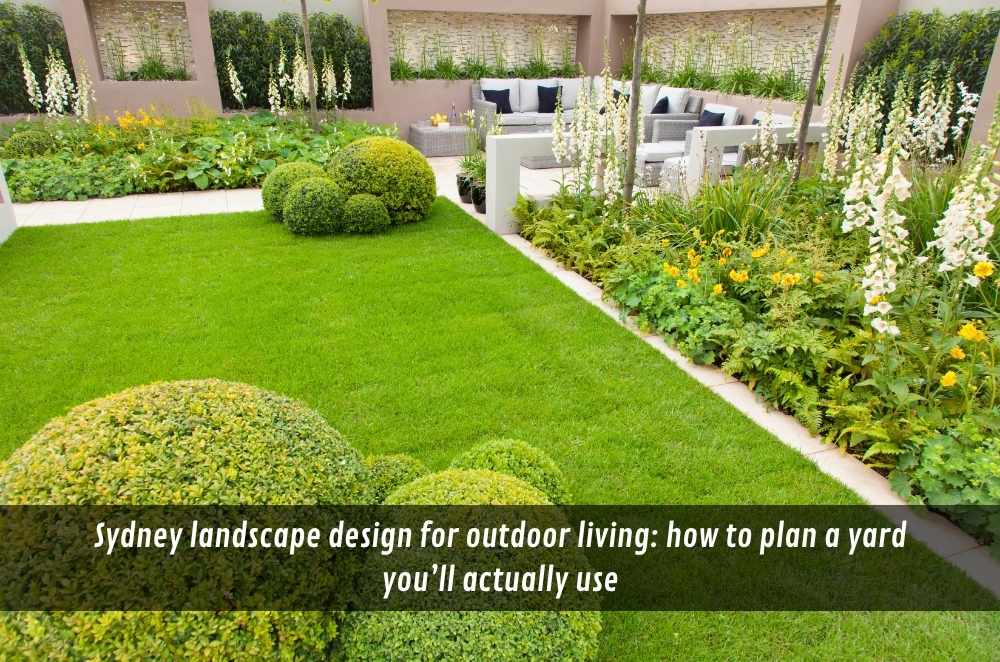
Sydney is made for outdoor living—until your backyard reminds you why people retreat indoors. A lawn that turns to mud after rain. A narrow side access that makes upgrades hard. A “nice” patio that’s either in full sun all afternoon or permanently damp in winter shade.
Good landscape design isn’t about adding more stuff. It’s about making the space behave: where you walk, where water goes, where you want to sit at 6pm, and what stays manageable when life gets busy. If you’re thinking about Sydney landscape design for outdoor living, the most useful approach is to treat your yard like a set of small, connected zones—each with a job to do.
Start with how you actually live outside
Before materials, plants or features, map the way you use the space week to week.
Define your top two outdoor “jobs”
Most Sydney yards can’t do everything well at once. Choose priorities such as:
A shaded dining area for weeknight meals
A kid/pet-friendly open zone that survives wear
A small entertaining space that doesn’t feel exposed
A low-maintenance front garden that improves street presence
Once the top jobs are clear, design decisions become easier: a BBQ needs hard, cleanable surfaces nearby; kids need sightlines; entertaining needs comfortable circulation and places to perch.
Follow the movement lines
Notice where people naturally walk: door to washing line, gate to bins, kitchen to outdoor table. These routes should be the easiest to move along—ideally on stable paving or stepping surfaces—so the garden doesn’t become a shortcut through planting beds.
Work with Sydney’s light, wind and shade patterns
Sydney backyards often have a split personality: intense summer sun, then long winter shade depending on orientation, trees and neighbouring buildings.
Place comfort first, then beautify
Outdoor living only works when it’s comfortable for long stretches. Consider:
Summer shade where you sit most (umbrellas, pergola planning, or trees positioned to cast shade when it matters)
Winter sun access if you want the space to feel inviting year-round
Wind breaks in exposed pockets (screens, hedging, planting layers)
Small shifts—like turning the dining zone 90 degrees or moving it closer to the house—can change how often you use it.
Solve drainage early (it’s the quiet deal-breaker)
If water pools near doors, paths or paving, outdoor living becomes a seasonal activity you tolerate rather than enjoy. Sydney’s downpours can overwhelm tired soil, compacted lawns, or older paving that’s settled over time.
Design-wise, the aim is straightforward:
Direct runoff away from the house
Create permeable areas where practical
Choose surfaces and edging that don’t let soil wash onto paving
This is also where retaining walls and levels matter. When yards are sloped (or previously “fixed” in a hurry), a thoughtful level plan stops future headaches.
Choose hardscaping that matches how you’ll use the space
Hardscaping is what makes outdoor living feel like an extension of the home. It’s also the part you notice daily—underfoot, around furniture, and along pathways.
Paving and paths: prioritise stability and cleaning
Ask a few practical questions:
Will you push a pram, trolley, or mower over it?
Does it need to be slip-resistant near wet zones?
Will leaves and dirt show constantly?
For many yards, a mix works best: a main “clean” surface for dining, plus simpler paths that keep feet out of garden beds.
Retaining walls: function first, finish second
Retaining isn’t only about aesthetics; it can create usable flat zones—especially in tight Sydney blocks. The key is getting levels and drainage right so the wall isn’t fighting water pressure long-term.
Turf: treat it like a surface choice, not a default
Turf is great when it has the right sun, drainage and usage pattern. But if the lawn is shaded, heavily trafficked, or constantly wet, it can become the highest-maintenance part of the yard. Sometimes a smaller, healthier lawn plus better “living” surfaces is the more livable solution.
If you’re comparing options for a renovation, it can help to look at the scope of typical upgrades—paving, retaining, turf and planting—on a dedicated page like this overview of landscaping services in Sydney.
Planting for outdoor living means fewer “hero plants”, more structure
A common mistake in backyard makeovers is treating planting as decoration rather than design. For outdoor living, planting has jobs:
Privacy without turning the yard into a dark tunnel
Shade that improves comfort in summer
Softening hard edges so paving doesn’t feel harsh
Guiding movement (subtle boundaries that make zones feel intentional)
Think in layers
A simple, resilient planting approach:
A structural layer (shrubs/hedges) to define edges and privacy
A mid layer (feature plants) to add texture and seasonal interest
A ground layer (low spreaders, mulch, or tough groundcovers) to suppress weeds and reduce maintenance
In Sydney conditions, the “right plant in the right spot” principle is the difference between a garden you enjoy and one you constantly rescue.
Build an outdoor room, not a “feature”
Outdoor living improves when the yard feels like it has a room-like function—somewhere you want to be, not just somewhere you look at.
Anchor the space with a focal point you’ll use
A fire pit can work, but so can:
A simple built-in bench in a quiet corner
A small paved spot for morning coffee
A defined dining pad with lighting for evenings
Focal points earn their keep when they match your routines.
Make space for storage and “messy” tasks
Bins, hoses, kids’ toys and garden tools are part of real life. If they don’t have a home, they spill into your “nice” areas. Even a discreet side zone—screened with planting—can keep the main space calm.
Plan for maintenance like it’s part of the design
Outdoor living fails when the upkeep feels endless. A low-friction design usually includes:
Clear edges (so grass doesn’t invade beds)
Enough access to maintain plants without stepping on them
Mulch or groundcovers to reduce weeds
Practical irrigation planning where needed
A garden can still be lush and inviting without being precious.
Budget and staging: do the parts that unlock the whole yard
If you can’t do everything at once, prioritise the upgrades that make the space usable:
Fix levels and drainage
Establish the main “living surface” (paving/deck/defined pad)
Add pathways for everyday movement
Plant for privacy and structure
Finish with details (feature pots, lighting, decorative layers)
That staging approach reduces the “half-finished” feeling and gets you using the space sooner.
Key Takeaways
Outdoor living works best when your yard is designed around real routines, not just looks.
In Sydney, comfort hinges on shade, winter sun access, and wind exposure.
Drainage and levels are foundational—get them right before choosing finishes.
Hardscaping should match daily use: stability, slip resistance, and easy cleaning matter.
Planting is most effective when it provides structure, privacy, and low-maintenance coverage—not just decoration.



Write a comment ...